30 Agents, 18 Pipelines, One Glass Box: Verifiable Agentic Science on Public Infrastructure
Scroll through six visual "one-bite" chapters from our new preprint (Baker et al., 2026)—showing why unguided local coding agents splinter into irreproducible chaos, and how grounding them in free public Galaxy and ACCESS-CI supercomputers turns AI agents into forensic auditors and discovery engines across 48 datasets.
Hand One Dataset to 30 Local Coding Agents—Get 18 Incompatible Pipelines
Autonomous coding agents can design and execute a complete multi-step study from a single prompt. But what happens when they improvise in isolated local terminals?
We handed a published bacterial RNA-seq study of Bacillus cereus enterotoxin regulation (Vyklická et al., 2025) to 30 independent frontier agents—10 Claude Opus, 10 OpenAI Codex, and 10 Google Gemini—and asked each for a replication plan.
Exposed to two routine ambiguities (a suppressed RefSeq assembly after taxonomic reclassification to B. pacificus, and whether DESeq2 pooled all 19 libraries or only 5 focal samples), 29 of the 30 agents diverged from the paper, splintering into 18 distinct pipelines.
cytK2, ~800 read pairs/library on ATCC 10987) and left behind 26 unversioned glue scripts (>1,200 lines of code).
Moving Agentic Science from Private Black Boxes onto the Galactic Plane
Today's vision of "agentic science" is largely being built behind closed doors—running on laptops or paid commercial clouds where intermediate files vanish when the session ends.
We took the opposite path. We connected CLI coding agents—and Orbit, our open-source desktop workbench built on Pi.dev—directly into UseGalaxy.org and free national ACCESS-CI supercomputers (Stampede3, Bridges-2, Expanse, Anvil, Jetstream2) via curated domain skills and a typed Galaxy Model Context Protocol (MCP) server.
Any researcher or student can drive multi-core CPUs, terabyte-RAM nodes, and NVIDIA GPUs at zero cost under one rule: the agent cannot hide its tracks.
When an Agent Benchmark Silently Runs a Demo File: The 82% Missing-Data Trap
What if a landmark Nature paper about reproducible agentic science itself fell prey to an unverified agentic shortcut—and our public provenance harness caught it?
In Paper2Agent (Miao et al., 2026), an agent wrapped the spatial transcriptomics tool TISSUE and cited a 5,613-cell mouse somatosensory cortex atlas (Dataset 15). Yet when we audited the result on Galaxy, we discovered that the benchmark had actually been run on a 1,000-cell unit-test demo file (tests/data/scRNA_count.txt) bundled inside the GitHub repo—silently discarding 82% of the reference cells!
On the 1,000-cell demo subset, predicted Acta2 expression was nearly uncorrelated with ground truth ($r = 0.0861$). Running TISSUE on UseGalaxy.org reproduced their 1,000-cell tutorial output to floating-point precision ($r = 1.0000$) and scaled to all 5,613 cells—tripling prediction accuracy to $r = 0.2553$.
Exposing Unstated Pooling, Unmerged Replicates, and Annotation Traps
Across 48 biological analyses, keeping every intermediate table in the open turned our agents into automated forensic auditors of peer-reviewed papers:
• Aspergillus fumigatus (30-library azole time-course): Pairwise DESeq2 missed 39% of published DEGs until our agent spotted identical baseMean values across all 5 timepoints—proving the authors had fitted one pooled 30-sample model (25 residual d.f.). Switching to the pooled design matched published counts within 0.3–1.3% ($r \ge 0.9996$).
• Anopheles gambiae (infection ATAC-seq): Reproduced 90.7–93.2% of chromatin peaks while proving headline region counts came from unmerged replicate rows.
• Aedes aegypti (midgut scRNA-seq, 6,707 cells): Fixed a non-model AAEL mitochondrial prefix that caused standard Scanpy QC to report 0% mitochondrial reads.
Unifying 2,592 Malaria Surface Antigens Across Three Continents on Public GPUs
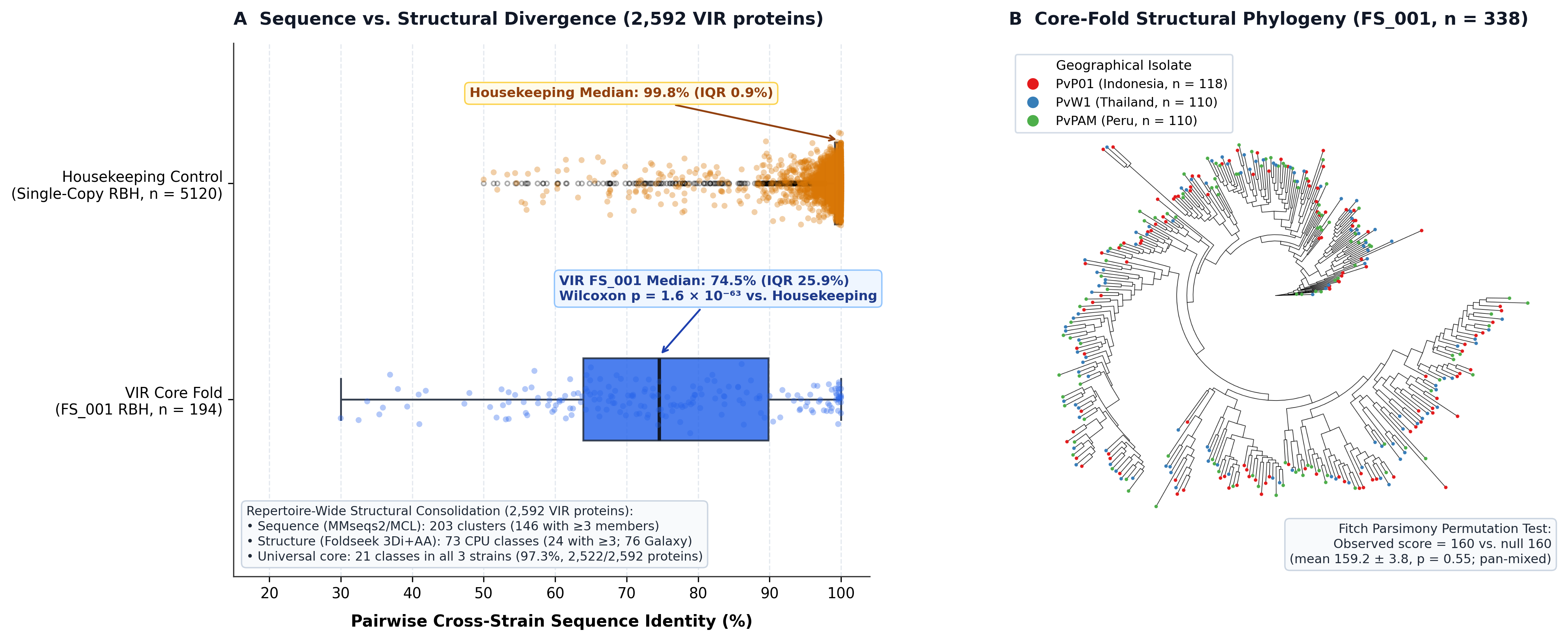
Moving from auditing past studies to new discovery, we directed Orbit to resolve the hypervariable VIR surface protein repertoire across three Plasmodium vivax genomes from Indonesia, Thailand, and Peru (2,592 proteins).
Because VIR proteins diverge into the sequence twilight zone ($\le 30\%$ amino acid identity), sequence clustering fractures them into 146–203 fragmented groups, obscuring whether parasites on different continents use distinct immune-evasion scaffolds.
By registering 10 unprivileged UDTs on UseGalaxy.org to orchestrate ProstT5 (3Di protein language model), Foldseek, FoldMason, and IQ-TREE 3 on national ACCESS-CI GPUs, Orbit collapsed the entire repertoire into 73–76 structural classes—showing that over 97% of all VIR proteins belong to 21 conserved ancestral folds shared across all three continents ($p = 0.55$).
Dating 42 Pathogen Epidemics in Seconds Instead of Days of MCMC
Finally, we wrapped ChronAeon as Galaxy User-Defined Tools and tasked Orbit with dating 42 published viral and bacterial BEAST benchmark alignments (41 unique cohorts across 37 studies, including Ebola, SARS-CoV-2, Zika, Dengue, Mpox, H1N1, Rabies, and Yersinia pestis).
Traditional Bayesian molecular clock inference (`BEAST`) requires hours to days of Markov chain Monte Carlo (MCMC) sampling per dataset. On UseGalaxy.org, Orbit executed all 42 cohorts in seconds per alignment, matching reference Bayesian emergence ($t_{\text{MRCA}}$) intervals across 61.5–64.1% of scored outbreaks with a median error of just 0.40 years for post-1980 epidemics.
Summary of Empirical Validations & Discovery Analyses on the Galactic Plane
Across 48 biological investigations spanning bacteria, mammalian spatial cortex, fungi, mosquito vectors, protozoan parasites, and 42 pathogen epidemic alignments, autonomous agents executed reproducible workflows on free public UseGalaxy.org and national ACCESS-CI supercomputing infrastructure.
| Biological System & Study | Assay & Scale | Agent & Infrastructure Stack | Forensic Audit or Discovery Finding |
|---|---|---|---|
| Bacillus cereus enterotoxin regulation Vyklická et al. (2025) |
Bacterial RNA-seq 5 libraries, 5,472 loci |
Generic CLI agent + Galaxy MCP + Skills | Replaced 26 unversioned local glue scripts from 30 unconstrained runs; caught split bacterial CDS rows and switched to Kallisto (38–60s/lib, $r = 0.9622$). |
| Mouse cortex spatial transcriptomics Paper2Agent (Miao et al., 2026) / TISSUE |
scRNA-seq + spatial 3,405 spatial & 5,613 reference cells |
Orbit + 2 UDTs on UseGalaxy.org | Exposed that the published benchmark ran on a 1,000-cell tutorial demo file (dropping 82% of cells); reproduced tutorial ($r = 1.0000$) and scaled to all 5,613 cells, tripling accuracy ($r = 0.0861 \to 0.2553$). |
| Aspergillus fumigatus azole time-course Hokken et al. (2019) |
Fungal RNA-seq 30 libraries (3 isolates × 5 timepoints) |
Orbit + Workflow Foundry + BRC-Analytics + 3 UDTs | Compiled a 60-step workflow; proved from identical baseMean columns that the authors fitted one pooled 30-sample DESeq2 model (matching counts within 0.3–1.3%, $r \ge 0.9996$). |
| Anopheles gambiae infection chromatin Ruiz et al. (2021) |
Vector ATAC-seq 4 libraries (midguts & salivary glands) |
Orbit + 3 UDTs on UseGalaxy.org | Reproduced 90.7–93.2% of published chromatin peaks without free parameters while showing headline region counts came from unmerged replicate rows. |
| Aedes aegypti midgut single-cell atlas Wang et al. (2024) |
Vector 10x 3' scRNA-seq 6,707 post-QC cells |
Orbit + BRC-Analytics on UseGalaxy.org | Staged non-model vector reference data, fixed an AAEL mitochondrial gene prefix mismatch that caused standard Scanpy QC to report 0% MT reads, and recovered 20 cell clusters de novo. |
| Plasmodium vivax VIR phylogenomics Carlton et al. (2008), Harrison et al. (2020) |
Structure-aware phylogenomics 3 genomes, 2,592 proteins |
Orbit + 10 UDTs (GPU & CPU) on ACCESS-CI | Orchestrated ProstT5, Foldseek, FoldMason, and IQ-TREE 3 on public GPUs, collapsing 146–203 sequence clusters into 73–76 structural classes (>97% in 21 conserved folds across 3 continents, $p = 0.55$). |
| Pathogen emergence dating 42 BEAST benchmark alignments (37 studies) |
Genomic epidemiology 42 viral & bacterial cohorts |
Orbit + 2 ChronAeon UDTs on UseGalaxy.org |
Dated 42 epidemic alignments in seconds per cohort instead of hours/days of Bayesian MCMC, matching Bayesian emergence dates on 61.5–64.1% of scored outbreaks ($0.40\text{ yr}$ median post-1980 error). |
Full-Resolution Reference Figures from the Preprint
Figure 1 • 30 Autonomous Agents Propose 18 Incompatible Pipelines for the Same Study
Alluvial diagram tracing 30 reanalysis plans generated by Claude Opus (blue), OpenAI Codex (orange), and Google Gemini (teal) without infrastructure guardrails across the eight pipeline steps of Vyklická et al. (2025).
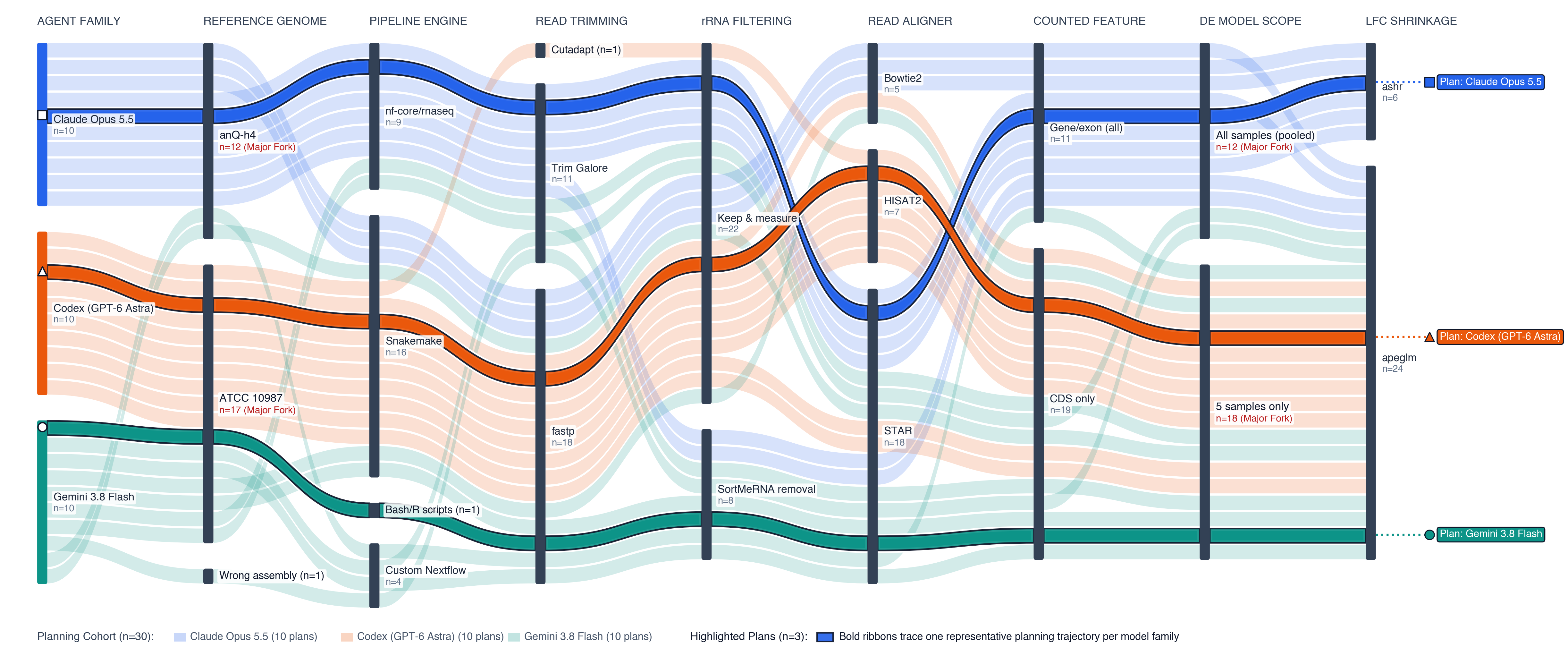
Figure 2 • Architecture for Verifiable Agentic Science on Public Infrastructure
Command-line coding agents or the Orbit desktop workbench connect via curated domain skills and the Galaxy Model Context Protocol (MCP) server to execute containerized workflows and User-Defined Tools across free national ACCESS-CI supercomputers, recording every step in a living research notebook.
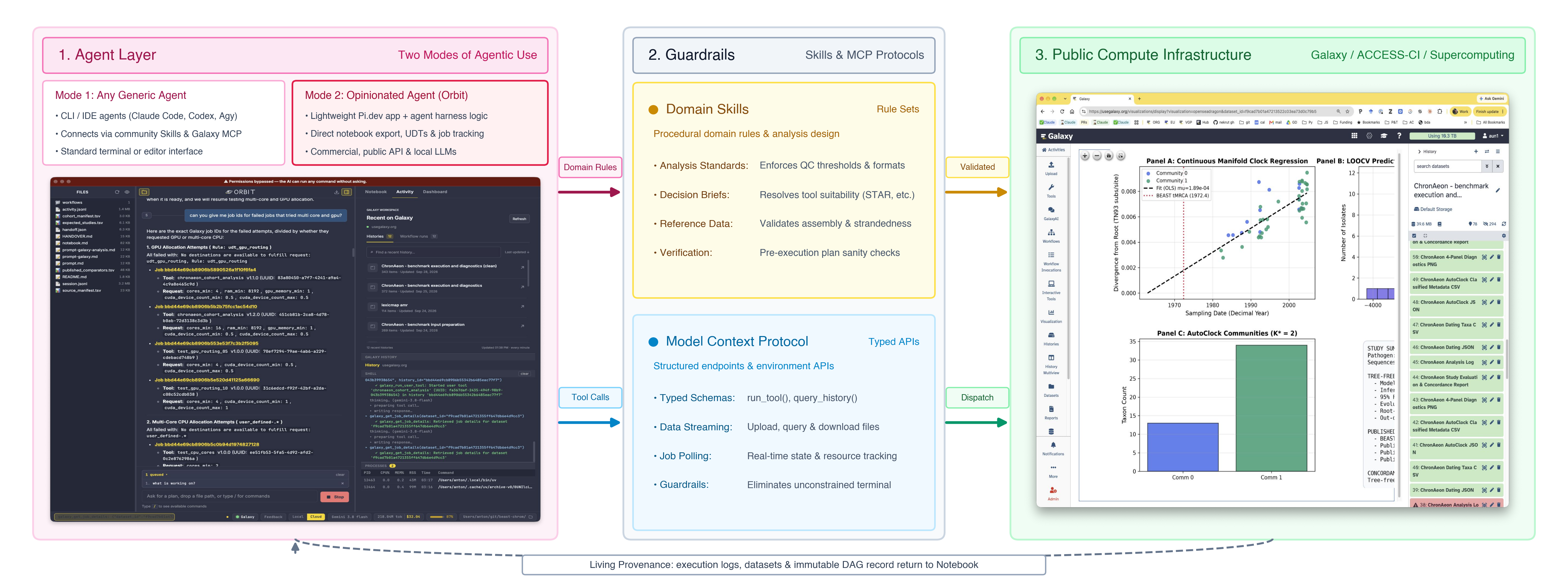
Figure 3 • Structure-Aware Phylogenomics of Plasmodium vivax VIR Antigens on Public GPUs
Orchestrating ProstT5 3Di structural embeddings, Foldseek, FoldMason, and IQ-TREE 3 via unprivileged UDTs on UseGalaxy.org collapses sequence-fragmented VIR surface antigens across Indonesia, Thailand, and Peru into 21 globally shared ancestral folds.